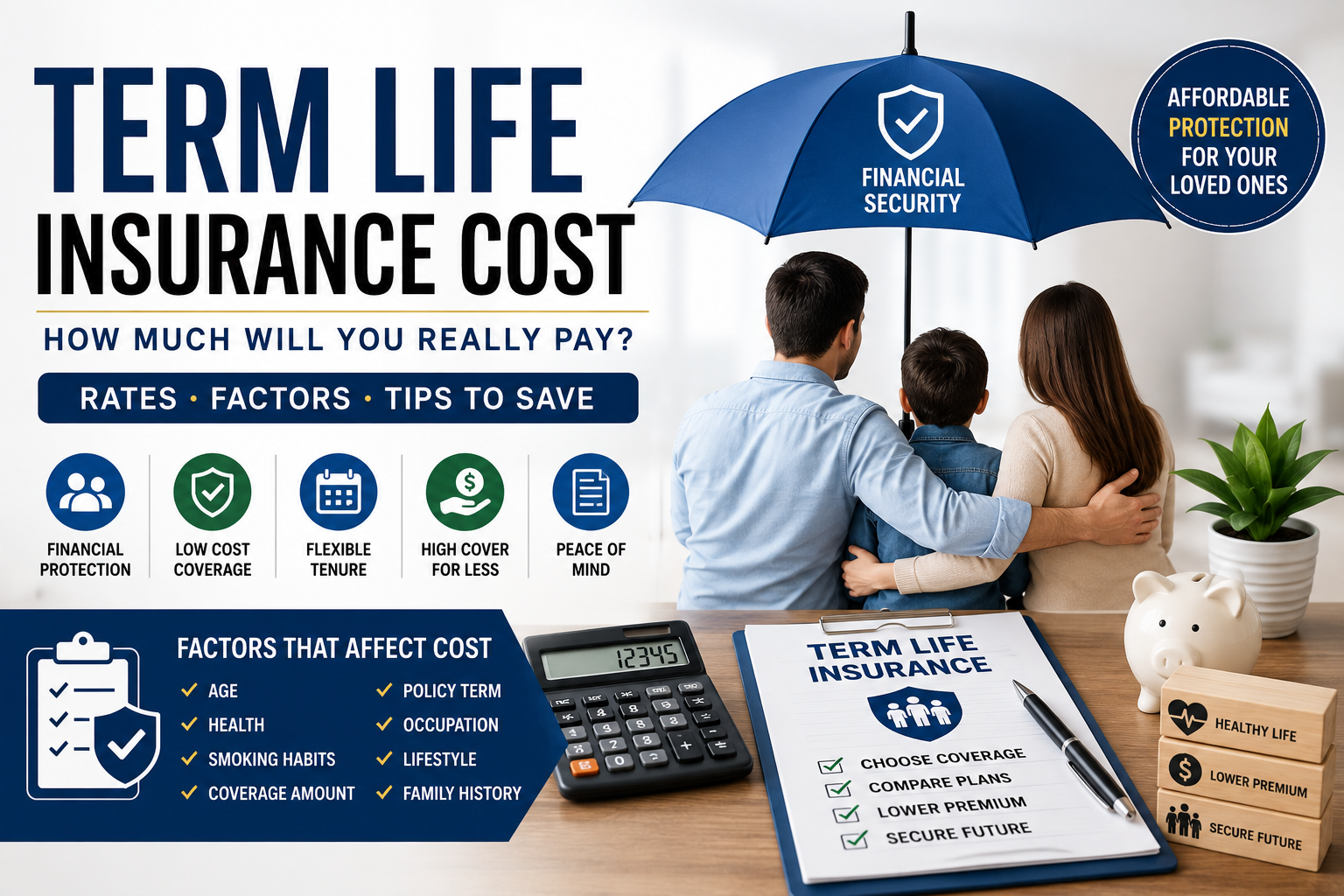
Learn how much life insurance you need and how to find cheap renters insurance with the right coverage, limits, and practical tips.
Life insurance and renters insurance protect two very different parts of your financial life, but both can play an important role in protecting your household.
One question many people ask is, “How much life insurance do I need?” The answer depends on your income, debts, family responsibilities, savings, future goals, and the financial support your loved ones would need if you died.
Renters have a different concern: “How can I get cheap renters insurance without sacrificing important coverage?” Renters insurance is designed to protect your personal belongings and provide liability coverage, and it can often be purchased for a relatively modest cost.
The key is not simply choosing the cheapest policy or the largest life insurance amount. The goal is to choose appropriate coverage for your actual financial risks.
This guide explains how to estimate your life insurance needs, how renters insurance works, how to lower your renters insurance cost, common mistakes to avoid, and how the two types of insurance fit into a broader financial protection strategy.
How Much Life Insurance Do I Need?
A practical starting point is to estimate how much money your family would need to replace your income, pay outstanding debts, cover future expenses, and maintain financial stability after your death.
There is no universal life insurance amount that works for everyone.
Someone who is single, has no dependents, has substantial savings, and has little debt may need considerably less coverage than a parent supporting a family and carrying a mortgage.
Quick definition
Life insurance coverage is the amount an insurer agrees to pay to eligible beneficiaries after the insured person’s death, subject to the policy’s terms and conditions.
For example, if you purchase a $500,000 life insurance policy, the policy’s death benefit is generally $500,000.
The important question is whether $500,000 would actually be enough for your family’s financial needs.
A Simple Life Insurance Calculation
A useful starting formula is:
Life insurance need = financial obligations + future income needs + future expenses − existing financial resources
Your calculation can include:
- Mortgage balance
- Other debts
- Income replacement
- Childcare
- Education costs
- Final expenses
- Emergency funds
- Existing savings
- Existing life insurance
- Retirement assets
- Other financial resources
This approach is usually more useful than selecting an arbitrary number.
The 10-to-15-Times-Income Rule
You may have heard that people should purchase life insurance equal to 10 to 15 times their annual income.
This can be a useful starting point, but it should not be treated as a universal rule.
For example, someone earning $60,000 per year might initially consider:
- 10 × income = $600,000
- 15 × income = $900,000
But income alone does not tell the entire story.
A person earning $60,000 with no dependents and substantial savings may need much less coverage than someone earning the same amount with three children, a mortgage, and significant debt.
The income-multiple method is therefore best used as a rough estimate before performing a more detailed calculation.
Factors That Determine How Much Life Insurance You Need
1. Your Income
Your income is one of the most important factors because your family may depend on it.
Ask yourself:
How many years of my income would my family need to replace?
If your household depends heavily on your salary, your required coverage may be higher.
For example, replacing $60,000 of annual income for 10 years represents $600,000 before considering inflation, taxes, investment returns, or other financial factors.
2. Number of Dependents
Dependents can include:
- Children
- A spouse
- Aging parents
- Family members who depend financially on you
The more people who rely on your income, the greater your potential insurance need.
A parent with young children may need coverage for many years because children require financial support for housing, food, education, healthcare, and other expenses.
3. Mortgage and Other Debts
Your life insurance calculation should account for debts that could become a burden on your family.
These may include:
- Mortgage
- Car loans
- Personal loans
- Credit card balances
- Student loans
- Business debts
- Other financial obligations
The exact treatment of a debt after death depends on the debt structure and applicable laws, but from a planning perspective, outstanding obligations should be considered.
4. Children’s Education
Parents may want life insurance to help fund future education.
Education costs can be significant, particularly when children are still young.
You can estimate:
Expected education cost × number of children
Then adjust the figure based on savings already dedicated to education.
5. Childcare
If one parent dies, the surviving parent may need additional childcare.
This is often overlooked.
Imagine a household where one parent works full time while the other manages childcare. If the stay-at-home parent dies, the surviving parent may suddenly need paid childcare.
That means life insurance needs are not limited to replacing a salary.
The economic value of unpaid household work also matters.
6. Final Expenses
Funeral and other final expenses can create an immediate financial burden.
Including a reasonable allowance for final expenses in your calculation can prevent your family from having to use emergency savings for these costs.
7. Existing Savings
Your savings reduce the amount of life insurance your family may need.
For example, suppose your estimated financial need is $800,000 and you have $150,000 in accessible financial resources that you intend to use for your family’s protection.
Your preliminary insurance requirement might be:
$800,000 − $150,000 = $650,000
The calculation should be individualized because not all assets are equally accessible or appropriate to count.
Life Insurance Needs Example
Consider a hypothetical family:
- Annual income: $70,000
- Mortgage and other debts: $250,000
- Estimated future family support: $500,000
- Education needs: $100,000
- Final expenses and other needs: $30,000
- Existing financial resources: $180,000
Estimated requirement:
$250,000 + $500,000 + $100,000 + $30,000 − $180,000 = $700,000
In this simplified example, approximately $700,000 could be a starting point for discussing coverage.
It is not a recommendation for every household.
How Much Life Insurance Do I Need If I’m Single?
Single people often need less life insurance than people with dependents, but that does not automatically mean they need none.
Consider whether someone would be financially affected by your death.
You may have:
- Private debt
- A mortgage
- Co-signed loans
- Business obligations
- Parents who depend on you
- A partner who depends on your income
- Funeral expenses
If nobody depends financially on you and you have sufficient assets to cover your obligations, your need may be relatively low.
However, your situation can change quickly after marriage, purchasing a home, or having children.
How Much Life Insurance Do I Need With Children?
Parents generally need to think beyond immediate expenses.
A life insurance policy may need to help cover:
- Household income replacement
- Housing
- Food
- Childcare
- Education
- Healthcare
- Transportation
- Everyday living expenses
Young children may require financial support for many years.
Therefore, parents with young dependents often need more coverage than parents whose children are already financially independent.
How Much Life Insurance Do I Need for a Stay-at-Home Parent?
This is an important question that is frequently overlooked.
A stay-at-home parent may not receive a traditional salary, but they provide valuable services.
If they die, the surviving parent may need to pay for:
- Childcare
- Household assistance
- Transportation
- Meal preparation
- Cleaning
- Other services previously handled at home
Therefore, life insurance can be relevant even when the insured person does not earn an income.
Term Life vs. Permanent Life Insurance
Two broad categories of life insurance are term life insurance and permanent life insurance.
| Feature | Term Life | Permanent Life |
|---|---|---|
| Coverage period | Specific term | Designed for longer-term/lifetime coverage |
| Typical cost | Generally lower initially | Generally higher |
| Cash value | Generally no | Some policies have cash value |
| Simplicity | Usually simpler | More complex |
| Common use | Income protection | Long-term estate/financial planning |
Term Life Insurance
Term life insurance provides coverage for a specified period.
Common policy terms may include periods such as 10, 20, or 30 years.
Term coverage can be useful when your primary objective is protecting your family during the years when they are financially dependent on you.
For example, a parent with young children may want coverage during the period when the children are growing up and becoming financially independent.
Permanent Life Insurance
Permanent policies are designed to provide longer-lasting coverage and may include a cash-value component depending on the policy.
They can be useful in certain financial planning situations, but they are typically more complicated than basic term insurance.
Because costs and features vary significantly, consumers should understand the policy’s fees, guarantees, cash-value mechanics, and surrender provisions before purchasing.
How Long Should Life Insurance Coverage Last?
The appropriate term depends on your financial responsibilities.
Consider:
- How old are your children?
- How long is your mortgage?
- When do you expect to retire?
- How much savings do you have?
- When will your spouse become financially independent?
- How long will your family depend on your income?
For example, a parent with toddlers may need coverage for considerably longer than someone whose youngest child is already in college.
The goal is to cover the period during which your death would create the greatest financial risk.
When Should You Buy Life Insurance?
Life insurance is generally most important when other people depend on your income or financial support.
Major life events that may justify reviewing your coverage include:
- Getting married
- Having a child
- Buying a home
- Taking on significant debt
- Starting a business
- Experiencing a major income increase
- Divorce
- Becoming financially responsible for a parent
- Approaching retirement
Your insurance needs are not permanent.
Review them periodically.
What Is Cheap Renters Insurance?
Cheap renters insurance refers to renters coverage that provides appropriate protection at an affordable premium.
The cheapest policy is not necessarily the best policy.
A policy that saves you a small amount every month but provides inadequate coverage could leave you financially exposed after a major loss.
Renters insurance generally combines several types of protection.
What Does Renters Insurance Cover?
Coverage varies by insurer and policy, but renters insurance commonly addresses several major risks.
Personal Property Coverage
This coverage is designed to protect belongings against covered losses.
Your belongings may include:
- Furniture
- Clothing
- Electronics
- Appliances
- Kitchen equipment
- Personal items
- Some valuables
It is important to understand the policy’s covered causes of loss, exclusions, deductibles, and coverage limits.
Personal Liability Coverage
Liability coverage can help protect you if you are legally responsible for certain injuries or property damage involving other people.
For example, a visitor could potentially be injured in your rented home.
The exact circumstances covered depend on the policy.
Additional Living Expenses
Some renters policies may help cover additional living expenses when a covered loss makes your rented home temporarily uninhabitable.
Depending on the policy, this could help with certain additional costs associated with temporary accommodation and related expenses.
How Much Renters Insurance Do I Need?
Your renters insurance amount should reflect the value of the belongings you would need to replace.
A useful starting point is to create a home inventory.
Walk through every room and record:
- Furniture
- Electronics
- Clothing
- Appliances
- Jewelry
- Computers
- Phones
- Sporting equipment
- Kitchen items
- Other valuable belongings
Add approximate replacement costs.
You may be surprised by the total.
A person who thinks their possessions are worth $10,000 might discover that replacing everything would actually cost $20,000 or more.
Actual Cash Value vs. Replacement Cost
This distinction is important when comparing renters insurance policies.
Actual cash value
A policy using actual cash value may account for depreciation when determining the value of damaged or destroyed property.
For example, an older laptop may be worth considerably less today than its original purchase price.
Replacement cost
Replacement-cost coverage is designed to provide the amount needed to replace covered property, subject to the policy terms and limits, rather than simply its depreciated value.
Replacement-cost coverage may cost more, but it can provide stronger protection.
Always check the policy wording before assuming which valuation method applies.
How to Find Cheap Renters Insurance
The best way to reduce renters insurance costs is usually to compare multiple quotes while keeping coverage levels reasonably consistent.
1. Compare Several Insurers
Insurance prices can vary substantially between companies.
Two insurers may offer similar-looking coverage at different prices.
Compare:
- Premium
- Deductible
- Personal property limit
- Liability limit
- Coverage type
- Exclusions
- Discounts
- Replacement-cost options
Don’t compare price alone.
2. Choose an Appropriate Deductible
A deductible is the amount you generally pay toward a covered claim before the insurer pays the remaining eligible amount.
A higher deductible can sometimes reduce your premium.
However, don’t choose a deductible that you could not comfortably afford after a loss.
For example, saving a small amount every month may not be worthwhile if the deductible would create a financial emergency.
3. Ask About Bundling
If you already have another insurance policy with a company, ask whether combining policies could reduce your overall premium.
Bundling availability and discounts vary.
4. Improve Home Security
Depending on the insurer, certain security measures may affect premiums.
Possible examples include:
- Smoke alarms
- Security systems
- Deadbolt locks
- Fire protection measures
Always ask the insurer whether a particular improvement qualifies for a discount before spending money on it.
5. Maintain a Good Insurance Profile
Insurers may consider various factors when determining premiums.
The specific factors and their impact vary by insurer and jurisdiction.
Maintaining continuous appropriate coverage and avoiding unnecessary claims may help in some situations, but never avoid reporting a legitimate claim simply to protect a discount.
How Much Does Cheap Renters Insurance Cost?
There is no single renters insurance price that applies to everyone.
Premiums can depend on factors such as:
- Location
- Coverage amount
- Deductible
- Building characteristics
- Claims history
- Liability limit
- Selected endorsements
- Personal risk factors
- Discounts
A policy with very low coverage may look cheap but may not adequately protect your belongings.
The better question is:
What is the lowest price I can pay for the level of coverage I actually need?
Cheap Renters Insurance vs. Bare-Minimum Renters Insurance
These terms are not necessarily the same.
Cheap renters insurance should mean affordable coverage that still provides appropriate protection.
Bare-minimum renters insurance may mean choosing very low coverage simply to minimize the premium.
For example, if your belongings would cost $25,000 to replace but your policy provides only $10,000 of personal property coverage, the policy may be inexpensive but inadequate.
Saving money on premiums should not create a much larger potential financial loss.
How to Lower Renters Insurance Costs Without Sacrificing Protection
Try these strategies:
Compare quotes
This is one of the simplest ways to identify competitive pricing.
Review your coverage annually
Your possessions and financial situation change.
You may have purchased new electronics, furniture, or other valuable items.
Avoid unnecessary coverage
Don’t pay for coverage you genuinely don’t need, but understand exclusions before removing anything.
Consider your deductible carefully
A higher deductible can sometimes lower the premium.
Ask about discounts
Ask whether you qualify for available discounts.
Keep your inventory updated
A home inventory won’t necessarily reduce your premium, but it can make the claims process more organized if you experience a covered loss.
What Renters Insurance Usually Does Not Cover
No insurance policy covers every possible event.
Common exclusions or limitations may involve certain situations such as:
- Flood damage
- Earthquake damage
- Normal wear and tear
- Intentional damage
- Certain high-value property beyond policy limits
- Certain business property
- Some types of water damage
The exact exclusions depend on the policy.
If you live in an area vulnerable to a particular natural disaster, investigate whether additional coverage is available or necessary.
Special Items May Need Extra Coverage
Standard renters insurance may have specific limits for certain categories of property.
Examples can include:
- Jewelry
- Collectibles
- Firearms
- Expensive electronics
- Musical instruments
- Business equipment
If you own expensive items, don’t assume your standard personal-property limit provides unlimited protection.
Ask about applicable sublimits and optional endorsements.
Life Insurance and Renters Insurance: What’s the Difference?
These two insurance products solve completely different problems.
| Feature | Life Insurance | Renters Insurance |
|---|---|---|
| Primary purpose | Protect beneficiaries after death | Protect renters against covered property/liability risks |
| Main beneficiary | Usually named beneficiaries | Policyholder/insured, depending on coverage |
| Protects | Financial dependents | Personal property and liability |
| Common concern | Income replacement | Property damage or loss |
| Coverage amount | Often hundreds of thousands or more | Based on property and liability needs |
| Premium factors | Age, health, coverage, policy type | Location, coverage, deductible, risk factors |
You generally should not think of one as a substitute for the other.
A family may need life insurance because its income depends on one or both adults, while a renter may need renters insurance to protect possessions and liability exposure.
A Practical Insurance Planning Checklist
Life Insurance
Review:
- Annual income
- Number of dependents
- Mortgage
- Other debts
- Education expenses
- Childcare requirements
- Final expenses
- Existing savings
- Existing life insurance
- Retirement assets
- Desired income replacement period
Renters Insurance
Review:
- Value of furniture
- Electronics
- Clothing
- Appliances
- Jewelry and valuables
- Computers
- Personal liability needs
- Deductible
- Replacement-cost options
- Policy exclusions
- Special coverage limits
Common Insurance Mistakes to Avoid
Mistake 1: Buying Life Insurance Based Only on Income
Income is important, but it is only one part of the calculation.
Debt, dependents, savings, education costs, childcare, and future financial needs matter too.
Mistake 2: Buying Too Little Renters Insurance
People often underestimate the cost of replacing everything they own.
A detailed inventory can reveal the true replacement value.
Mistake 3: Choosing the Cheapest Policy Automatically
Price is important, but coverage quality matters.
A policy with a slightly higher premium may provide significantly better protection.
Mistake 4: Forgetting to Update Coverage
Insurance needs change.
Marriage, children, a new home, increased income, new possessions, and major financial changes can all affect your insurance requirements.
Mistake 5: Ignoring Policy Exclusions
Never assume that a policy covers a particular event simply because the policy is described as comprehensive.
Review the actual coverage terms.
How Often Should You Review Your Insurance?
A practical approach is to review your insurance at least once a year and whenever you experience a major life change.
For life insurance, review your coverage after:
- Marriage
- Divorce
- Birth or adoption
- Home purchase
- Major salary increase
- Major debt increase
- Retirement planning changes
For renters insurance, review coverage after:
- Moving
- Buying expensive electronics
- Purchasing jewelry
- Major furniture purchases
- Starting a home-based business
- Significant changes to your belongings
Frequently Asked Questions
How much life insurance do I need?
Your life insurance need depends on your income, debts, dependents, future expenses, savings, and financial goals. A useful starting calculation is to add your family’s financial obligations and future income needs, then subtract resources already available to them.
Is 10 times my salary enough for life insurance?
Ten times your annual income can be a useful starting estimate, but it is not a universal rule. Families with large debts, young children, or significant future expenses may need more, while people with substantial assets and few dependents may need less.
How much life insurance do I need if I have no dependents?
You may need less coverage if nobody depends on your income. However, debts, final expenses, co-signed obligations, business responsibilities, or family members who depend on you financially may still create a need for coverage.
How much life insurance do parents need?
Parents should consider income replacement, mortgage and other debts, childcare, education, everyday household expenses, and existing financial resources. The younger the children and the more dependent the household is on the parent’s income, the greater the potential need may be.
What is cheap renters insurance?
Cheap renters insurance is affordable coverage that still provides an appropriate level of protection for your belongings and liability exposure. The cheapest available premium is not necessarily the best value.
How can I get cheap renters insurance?
Compare multiple insurers, select appropriate coverage limits, consider your deductible carefully, ask about discounts, and review your policy regularly. Avoid reducing coverage so much that you become financially exposed after a major loss.
Does renters insurance cover all my belongings?
Not necessarily. Policies have coverage limits, exclusions, deductibles, and special limits for certain categories of property. Expensive items may require additional coverage.
Is renters insurance worth it?
For many renters, it can provide valuable protection for personal belongings and liability exposure at a relatively manageable cost. The value depends on your circumstances, possessions, risks, and policy terms.
Does renters insurance cover flooding?
Standard renters policies may exclude certain types of flood damage. If flooding is a meaningful risk where you live, investigate whether separate or additional coverage is available.
Should I choose replacement cost renters insurance?
Replacement-cost coverage can provide stronger protection for covered personal property because it is generally designed around the cost of replacing eligible items rather than only their depreciated value. However, it can affect the premium, so compare the cost with the additional protection.
Can renters insurance cover expensive jewelry?
Some policies provide limited coverage for jewelry and other high-value categories. If you own expensive items, check the policy’s specific limits and ask whether additional coverage is available.
Does life insurance cover funeral expenses?
Life insurance proceeds can generally be used by beneficiaries for expenses such as funeral costs, debts, housing, education, or other financial needs, subject to the policy and applicable rules.
Final Thoughts
Knowing how much life insurance you need starts with understanding what your family would financially lose if you were no longer there to provide income, services, or support.
Instead of choosing an arbitrary amount, calculate your major obligations, future expenses, income replacement needs, and available assets. Then review the result whenever your financial situation changes.
For renters, the objective is slightly different. The goal of cheap renters insurance should not simply be finding the lowest premium. You want affordable coverage that adequately protects your belongings and provides appropriate liability protection.
The most effective strategy is simple:
- Calculate your actual financial risks.
- Determine the amount of coverage you realistically need.
- Compare policies based on both price and coverage.
- Understand deductibles and exclusions.
- Protect expensive or unusual items appropriately.
- Review your insurance after major life changes.
- Avoid choosing a policy solely because it has the lowest price.
Insurance works best when it is designed around your actual financial situation rather than a generic rule.
The right amount of coverage is not necessarily the biggest policy you can afford or the cheapest policy available. It is the coverage that provides meaningful financial protection without unnecessarily straining your budget.